




What’s the best way to build a winback strategy for inactive customers?
The best way to build a winback strategy for inactive customers is to base timing and messaging on real purchase behavior, not arbitrary delays. When winback is grounded in product category and customer data, brands can re-engage customers at the moment they’re truly at risk without annoying active buyers or relying on unnecessary discounts.
You’ve already invested time and money to acquire every customer on your list, so when someone stops buying or engaging, it’s rarely a signal to give up on them entirely. More often, it’s a sign they’ve drifted. Maybe they’re exploring alternatives, their needs have changed, or their last experience didn’t give them a strong reason to return.
Winback campaigns exist to diagnose and reverse that drift, and they’re one of the most efficient levers in retention marketing. But while winback is powerful, it’s also easy to get wrong—especially when it’s treated as a basic automation instead of a strategic decision about timing, relevance, and restraint.
Most winback flows fail because they treat every customer the same. We have all seen them. They arrive exactly 90 days after a purchase with a needy "we miss you" subject line and a discount code that feels like a bribe. Historically, this is a topic many marketers struggle with because it has been treated like a basic automation task.
For example, a customer who bought a $500 premium jacket isn’t lapsed because they haven’t purchased again in 90 days after making a major investment. But a customer who buys a supplement? That’s a different story.
To me, retention is an ever-evolving strategy of testing and refining, not a "set it and forget it" flow. The difference between a winback strategy that captures revenue and one that annoys comes down to data insights and a deep understanding of the realities of your product and customers. The rest of my article walks through how to calculate your actual reorder window, build category-specific flows in Klaviyo, and structure your offers so you’re not leading with discounts.
Take a step back: fix your post-purchase first
Before you calculate winback timing, it’s critical to confirm your post-purchase experience isn’t creating the problem you’re trying to solve. If customers disengage because transactional emails are confusing, onboarding is weak, or support is hard to access, no amount of winback optimization will fix that downstream.
A quick audit:
- Avoid heavy cross-selling immediately: Stop trying to force a repurchase in the first week except for sensible order add-ons and cross-sells. A subtle two-product recommendation block can start planting the seed for what’s next.
- Focus on care and support: Send guides on how to best use and maintain your products. Offer opportunities for support or link to relevant FAQs to reduce friction. Make returns and exchanges easy.
- Gather data: Use review requests and feedback loops, like an order confirmation page or NPS survey, to ensure your post-purchase experience is airtight. These surveys are also the best way to understand the repurchase mindset before your customers ever hit a lapsed state.
Once post-purchase is solid, the question becomes: how long should you wait before considering a customer at-risk? That depends entirely on your product category.
Timing by category: grounding strategy in purchase reality
Winback timing should be grounded in how often customers naturally reorder, not in a fixed calendar delay. A person who buys a pair of skis is not on the same clock as someone buying a replenishment product like protein powder.
According to Klaviyo benchmark data, average time between orders varies widely by category, often under 45 days for replenishable products, roughly 60–120 days for apparel, and several months or longer for high-AOV durable goods.
Determining the right winback timing window requires three inputs:
- your baseline average (how long do most customers take to reorder?)
- individual-level predictions (when is this specific customer likely to churn?)
- category context (what's realistic given your product type?).
Let's work through each.
Calculating your average buying cycle with AI
To get the average buying cycle for your repeat customers, create a segment of everyone who has made at least two purchases in the last two years (What someone has done > Placed Order > is at least 2 > over all time). Export this into a CSV and average the Average Time Between Orders column.
Using that median is a solid baseline, but to truly architect a high-performance engine, you can go deeper. I recommend exporting your customer data including Number of Purchases, AOV, Historic CLV, Predicted CLV, and Gender. In the age of AI, you can feed this data into your favorite analysis tool to uncover specific clusters of repeat purchase behavior that a standard analysis might miss. This allows you to generate suggestions for hyper-specific splits and messaging based on actual customer types.
Layering Predictive Analytics
If your account has at least 500 customers and 180 days of history, utilize Klaviyo’s predictive fields to build smarter segment-triggered flows:
- Expected Date of Next Order: For customers with a purchase pattern, Klaviyo predicts the specific window they should return. If they haven't purchased it by this date, they are officially "At-Risk."
- Churn Risk Prediction: A customer with a 70% churn risk needs a completely different message than someone at 21% who is simply a few days late.
- Predicted CLV: Use this to protect your margins. Offer a higher-tier perk or personal outreach to a "High Predicted CLV" customer while keeping others on a value-led content path.
These data points give you precision at the individual level. But before you build your flow, you need to sanity-check your timing against category norms because a customer who buys a tent isn't on the same clock as someone buying moisturizer.
Example category considerations
- Lifestyle Apparel & Footwear: A customer who buys a pair of sneakers or jeans and has a positive experience typically has a more natural window of repurchase. In this category, the winback should focus on style evolution and seasonal updates. If they haven't returned by day 100, they are officially at-risk.
- Outdoor Gear and Hard Goods: A customer is not lapsed because they haven't bought another $500 technical jacket or backcountry tent in 90 days. That was a major investment! If your assortment is diverse, you can piece together "next best product" recommendations and suitable accessories. For specialty small-line retailers, sometimes you have to respect the durability and seasonal nature of your product.
- Replenishable Products: If your items have a set buying cycle (like skincare or supplements), Klaviyo recommends a separate Replenishment Flow entirely. This uses Trigger Filters for specific products so the email hits exactly when the bottle is empty.
- Subscription Businesses: If a renewal has passed, your focus is reactivation. The trigger should be based on the date their subscription lapsed or was cancelled. Read more about that in this Community post.
- Advocacy Zones: For very high-AOV items that are truly one-time purchases (like high-end furniture), pivot from winback to product satisfaction efforts over time. Leverage that excitement for review volume, UGC advocacy, and referrals instead.
Now that you know when to trigger your winback flow, you need a framework for how aggressively to message based on how far past due a customer is.
Defining at-risk, lapsed, and churned
Stop treating all inactivity the same. Use a three-tier framework to structure your winback messaging and offers:
- At-Risk: Customers have just passed their expected reorder date. Messaging should be helpful, proactive, and value-led.
- Lapsed: They are officially outside the normal window. This is the time to remind them why they loved the brand and show them what’s new.
- Churned: These users have likely moved on. This is where you can be more aggressive with incentives or a "breakup" discount as a last resort.
With these three tiers defined, here's how to build the actual flow structure in Klaviyo.
Structural implementation in Klaviyo
To build correctly, start with this guide and use a Metric-Triggered Flow based on the Placed Order event.
- Set a Time Delay: Set this delay to your "At-Risk" window (e.g., 60 days).
- Add Flow Filters: Use the filter: Placed Order zero times since starting this flow. This ensures that if a customer buys at any point during the delay or the sequence, they are immediately ejected.
- Use Conditional Splits: Branch the flow based on the predictive data mentioned above, like Churn Risk and Predicted CLV, to personalize the offer and tone.
Your flow structure handles the mechanics, but it needs to coordinate with your campaign calendar.
The interplay: campaigns and flows
A high-performance retention system requires intentional campaign exclusion. If someone is in a critical winback window, they should be excluded from your regular campaigns to avoid confusion and fatigue. (You should also consider exclusions for subscribers in Welcome and Cart Abandonment flows!)
For every campaign, ask yourself: Is this person currently in a more relevant flow sequence? Exclusion segments are your best friend and Smart Sending is the added safety net to prevent over sending between campaigns and flows.
Offer strategy: the ladder before the discount
Discounts train customers to wait for an offer or sale. Instead, use an Offer Ladder that escalates based on engagement levels:
- Phase 1: Brand Utility & Awareness (The Light Touch): Start by letting them know you’ve noticed they haven't been around. Share evergreen content like "pro-tips" for their previous purchase, brand mission stories, or "Best of" guides. If the customer opens but doesn't click, or doesn't open at all after 2–3 emails in this phase, escalate to Phase 2.
- Phase 2: Personalization & Selective Urgency: Suggest "the next best product" based on their history. Introduce urgency through scarcity, such as highlighting a customer favorite they haven’t purchased that frequently sells out, rather than a price cut. If scarcity and personalization don't convert within 2 emails, move to Phase 3.
- Phase 3: Service-Led Incentives: Before cutting margin, offer perks like free shipping, a gift with purchase, or bonus loyalty points. These feel like a reward for returning, not a bribe for leaving. If service-led incentives don't drive a return within 1–2 emails, the customer moves to Phase 4.
- Phase 4: The Final Effort: Reserved for truly churned customers. This is where a meaningful discount comes in. Pair it with a tailored “we miss you” message for your brand. If they don’t engage, you’ve made your best effort and they will either come back through another avenue or ride off into the sunset (sunset flow that is!).
Your offer ladder applies to email, but what about SMS?
When to use SMS for winback
SMS is a high-value, high-risk channel. It's immediate and hard to ignore which makes it powerful for urgent messages but dangerous for anything that feels like spam.
With that said, use email as your default and SMS as a selective accelerator. Better yet, let AI determine the optimal channel for each customer. Channel affinity analyzes individual engagement patterns (opens, clicks, purchases) across channels and routes messages accordingly. A customer who consistently ignores email but responds to texts within minutes gets the SMS. One who engages deeply with email content but rarely opens texts gets the email. This takes the guesswork out of choosing whether to send an email or a text.
Strong winback messaging often requires more context and is better served by the storytelling and visuals email provides rather than a 160-character text. A simple sequencing rule: only trigger an SMS if the previous email in the flow was not opened. This keeps the channel high-value and prevents you from becoming "the brand that texts too much."
Measurement: defining success
In addition to click rate, watch your Conversion Rate and Revenue Per Recipient. To judge the true impact, use a Holdout Test in Klaviyo to see if your winback flow is actually driving new behavior (Incremental Lift) or just capturing sales that would have happened anyway.
Your implementation checklist
| Week 1 | Audit post-purchase flows | Review your transactional and post-purchase emails. Are you helping customers use the product? Are you gathering feedback? Fix any gaps before optimizing winback. |
| Week 1 | Calculate your baseline timing window | Create a segment of customers with 2+ purchases, export the data, and calculate your average time between orders. This is your starting point for at-risk timing. |
| Week 2 | Export customer data for segmentation | Pull CLV, AOV, purchase count, and gender data. Use AI analysis tools to identify customer clusters that may need different timing or messaging. |
| Week 2-3 | Build your metric-triggered flow | Set up a Placed Order trigger with a time delay based on your at-risk window. Add flow filters to eject customers who purchase. Add conditional splits for churn risk and predicted CLV. |
| Week 3-4 | Create your offer ladder content | Build 4 phases of emails (value-led content, personalized recommendations, service incentives, and final discount) with escalation logic based on engagement. |
| Week 4 | Set up exclusion segments | Create segments for customers currently in winback flows and exclude them from regular campaigns. |
| Week 4 | Launch with a holdout test | Exclude 10–15% of qualifying customers to measure incremental lift. |
| Monthly | Review and iterate | Check conversion rates, revenue per recipient, and holdout test results. Adjust timing, offers, or content based on what you learn. |
Additional helpful resources:
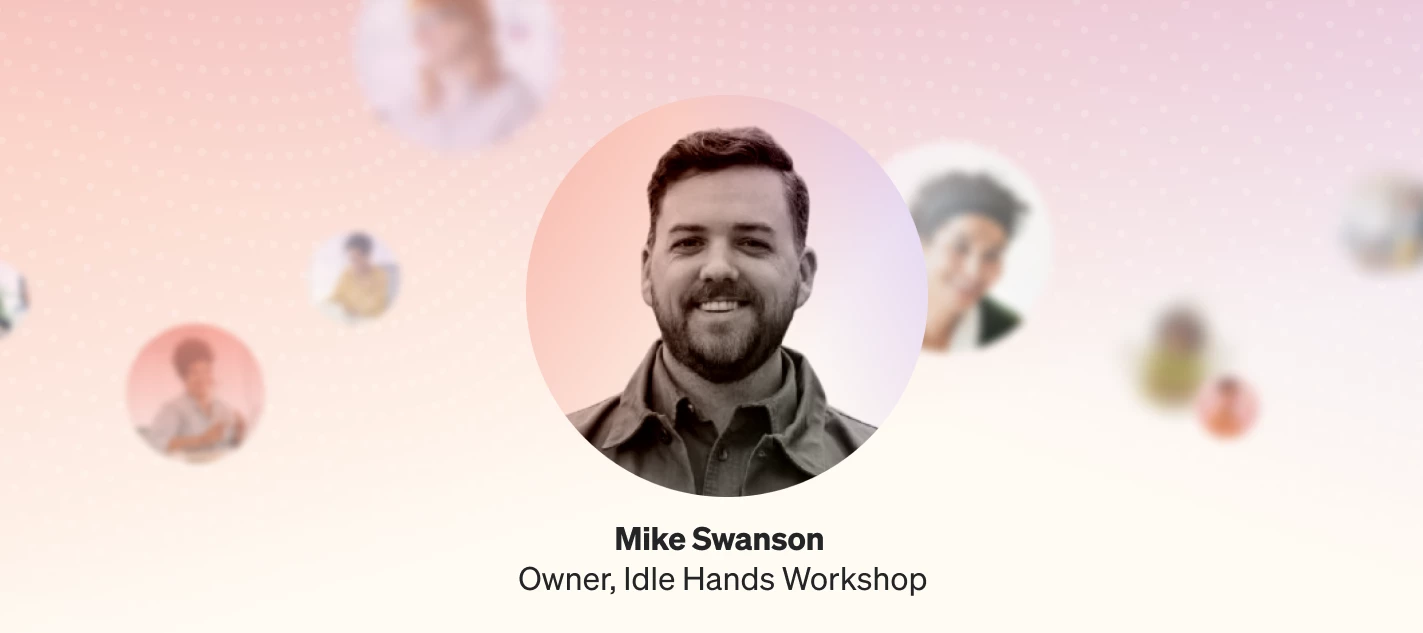
About Mike Swanson
Idle Hands Workshop the strategic consulting practice of Mike Swanson, a Klaviyo Community Champion. He partners with leadership teams to translate Brand Integrity and GTM strategy into high-performance Retention Engines through Klaviyo.