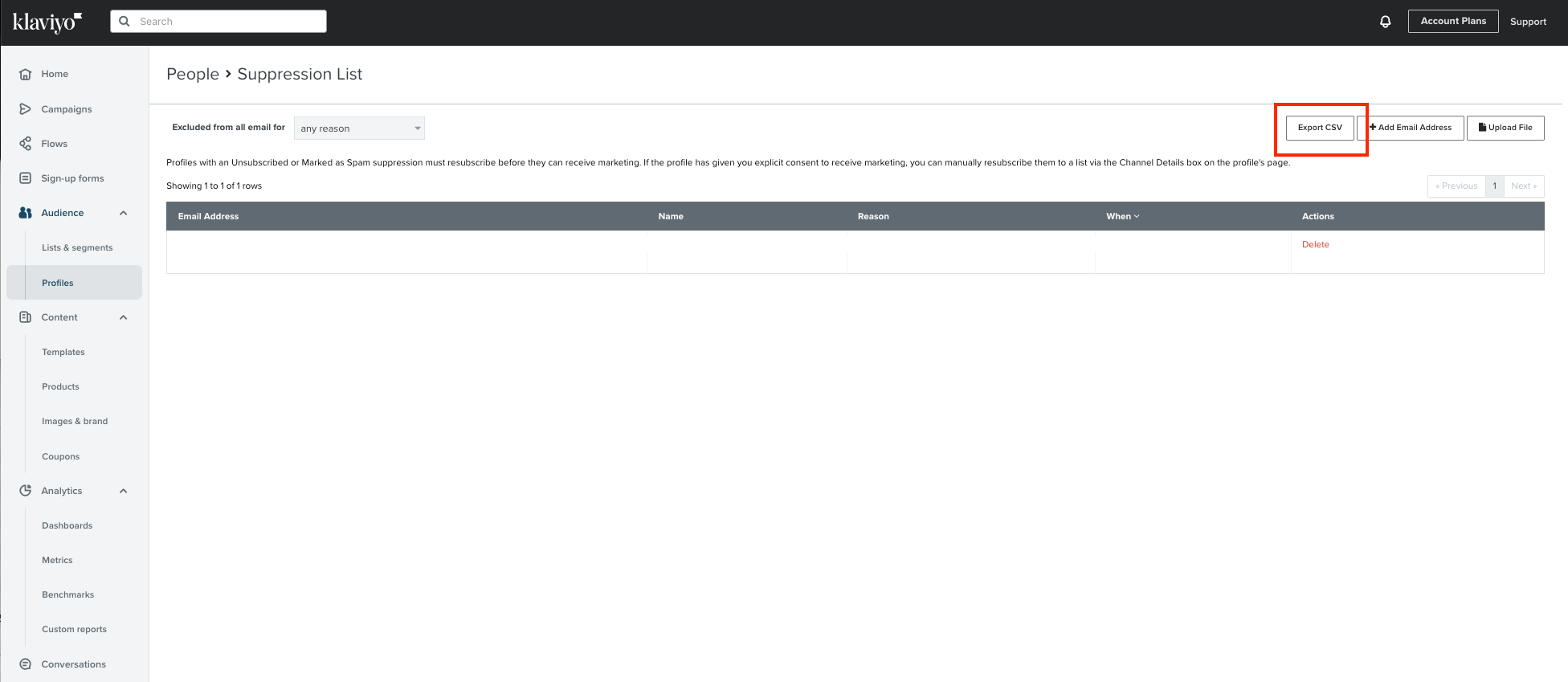


You can find who was suppressed and for what reasons for previous dates by exporting your list of suppressed people and filtering it directly in the CSV.
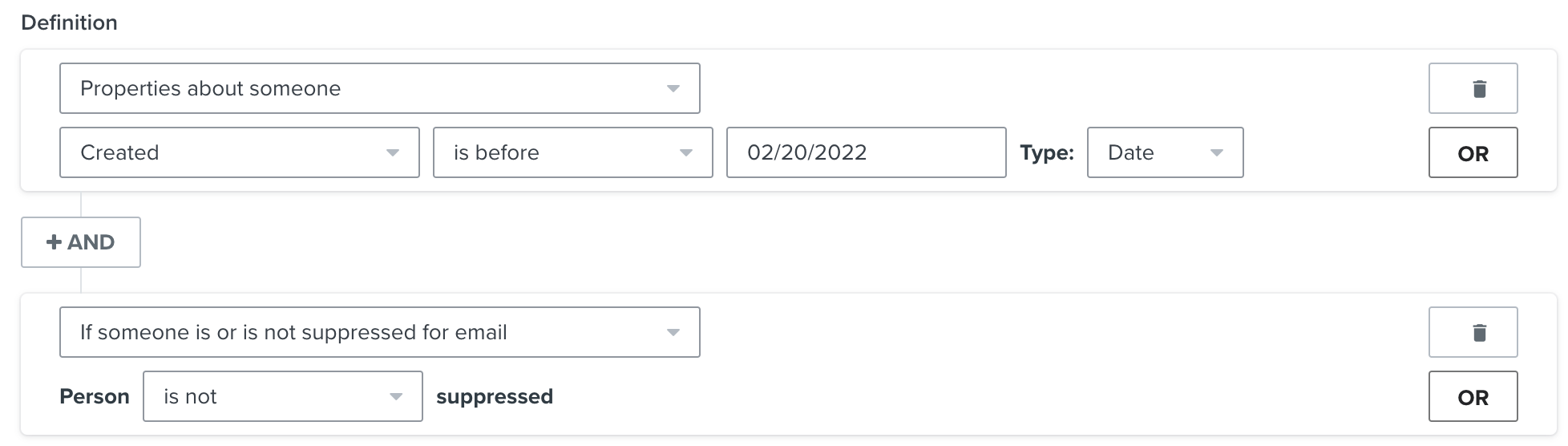
Active profiles on the other hand would be a bit trickier as it would depend on what your goal and your own definition of an active profile is. Though, using the segment definition of “properties about someone, created...” is already a very efficient method. Using this definition is great for identifying when profiles were first recognized.
If you were more interested in identifying when users became subscribers though, you may have better luck using segmentation based on the subscribed to list metric or even just referencing the list growth report.
You can find who was suppressed and for what reasons for previous dates by exporting your list of suppressed people and filtering it directly in the CSV.
Active profiles on the other hand would be a bit trickier as it would depend on what your goal and your own definition of an active profile is. Though, using the segment definition of “properties about someone, created...” is already a very efficient method. Using this definition is great for identifying when profiles were first recognized.
If you were more interested in identifying when users became subscribers though, you may have better luck using segmentation based on the subscribed to list metric or even just referencing the list growth report.
I hope this helps!
David
Search saves time. Contributing compounds value.
The ROI of your reply? One helpful answer can support dozens of teams, build your credibility, sharpen your own expertise over time, foster connectivity, and create good karma – because what goes around comes around. The community is what YOU make it.