

Personalization that pays off: 3 ways to increase AOV without more discounting
We are well beyond the days of relying on batch-and-blast email sends and constant discounting to drive revenue. In my experience, those tactics might create short-term spikes, but they usually come at the expense of margin, list health, and long-term engagement.
What I've seen work better is personalization that helps customers find the right products faster and gives them a reason to add more to their cart without immediately reaching for a promo code. The data backs this up: brands that shift away from batch-and-blast to personalized sends consistently see stronger revenue lift.
At Black Diamond Equipment, we have a customer base that spans several different activities including climbing, skiing, hiking, and trail running. There's overlap between those audiences, but there are also very different purchase behaviors depending on where someone is in their outdoor journey.
Because of that, personalization has become less of a "nice to have" and more of a profitability strategy. When we send more relevant content, recommend complementary products, or build smarter post-purchase experiences, we typically see stronger engagement and higher average order value without increasing discounts.
Here are three tactics I've found especially effective.
1. Build smarter segmentation around behavior and interests
One of the clearest ways to improve personalization is through a more thoughtful segmentation strategy.
A lot of brands stop at engagement-based segments like customers active in the last 30, 60, or 90 days. That's still important, especially for protecting deliverability and maintaining list health, but I usually recommend layering in product interest or activity-based segmentation as well.
“Stop segmenting purely by what people clicked and start thinking about where they actually are in their decision. Are they researching? Are they almost there? That's where AOV starts to move."
– Liis Schmidt, Head of Email & SMS at Defiant Digital
“It’s never too late,” says Tabish Bhimani, Director of Mastrat Digital. “Start by collecting subscriber interests directly: add a preference question to your new-visitor popups, and send your existing list a short email with a one-click profile update link. For subscribers with multiple interests, direct them to a form where they can select all that apply.”
For us, someone shopping for climbing gear behaves very differently from someone shopping trail running apparel. Even if both customers are highly engaged, the products, messaging, and timing that resonate with them are often completely different.
This becomes especially important when trying to increase AOV. If a customer is shopping for climbing equipment, we can recommend complementary gear or accessories that actually make sense for that activity instead of sending generic promotions.
I've also found that this approach helps reduce the need for aggressive discounting because the email itself feels more relevant. Relevance tends to outperform broad offers over time.
Within Klaviyo, we typically build segments using:
- Recent engagement windows
- Viewed product categories
- Purchase history
- Predicted interests
- Zero-party data from giveaways or sign-up forms
Even simple adjustments here can lead to stronger click-through rates and better revenue per recipient.
Learn more about segmentation tactics:
2. Use dynamic product feeds to drive cross-sells and bundles
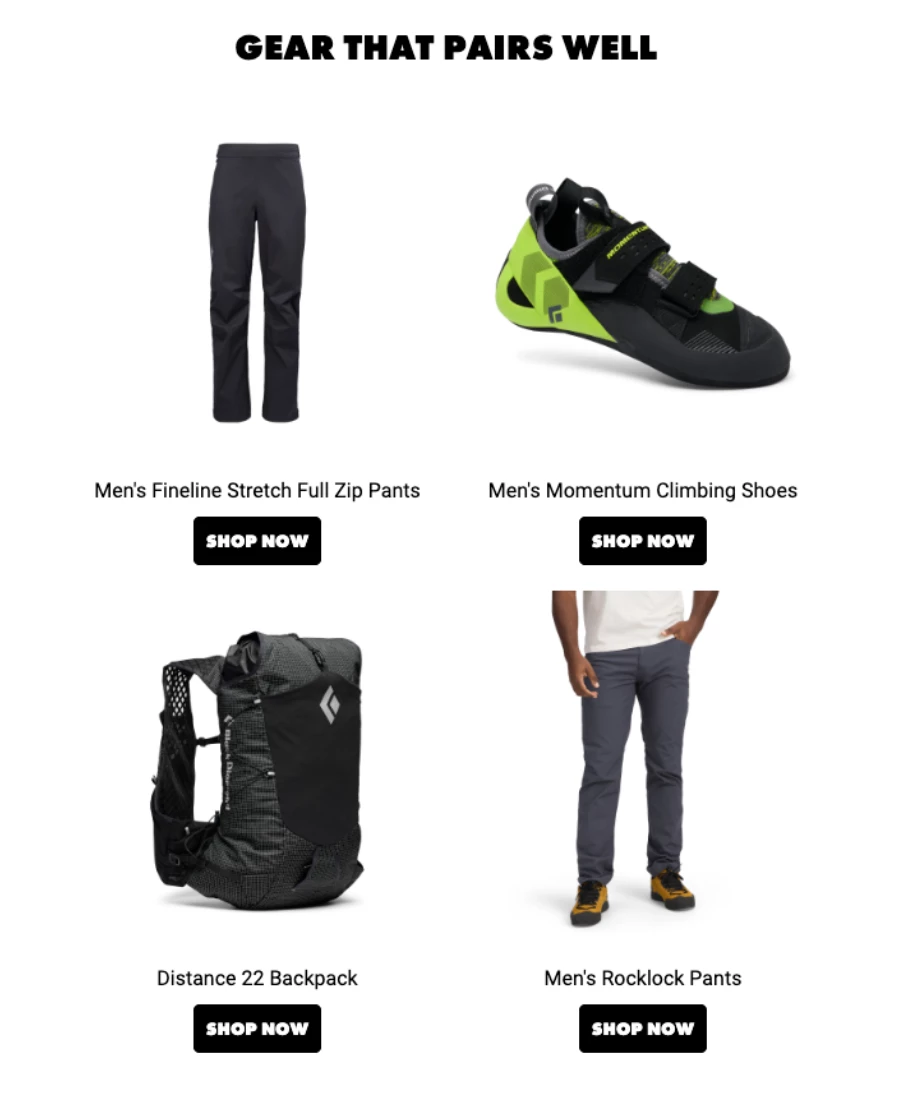
One of the easiest personalization tactics to implement is a dynamic product feed within Klaviyo.
What I like about dynamic feeds is that they allow you to tailor recommendations based on actual customer behavior instead of manually selecting products for every campaign.
- Depending on the use case, we might:
- Recommend complementary products based on a recent purchase
- Surface bestsellers within a customer's preferred category
- Promote higher-margin complementary products
- Build out "complete the kit" recommendations
We use dynamic product feeds in both campaigns and automated flows, but I've generally seen the strongest performance in key customer touchpoints where intent is already high.
3. Treat post-purchase flows as an up-sell opportunity
A lot of brands treat post-purchase emails as transactional touchpoints, but I think they're one of the best opportunities to increase customer lifetime value and AOV.
When someone has just purchased, they're already engaged and paying attention. The key is making the follow-up feel helpful first and promotional second.
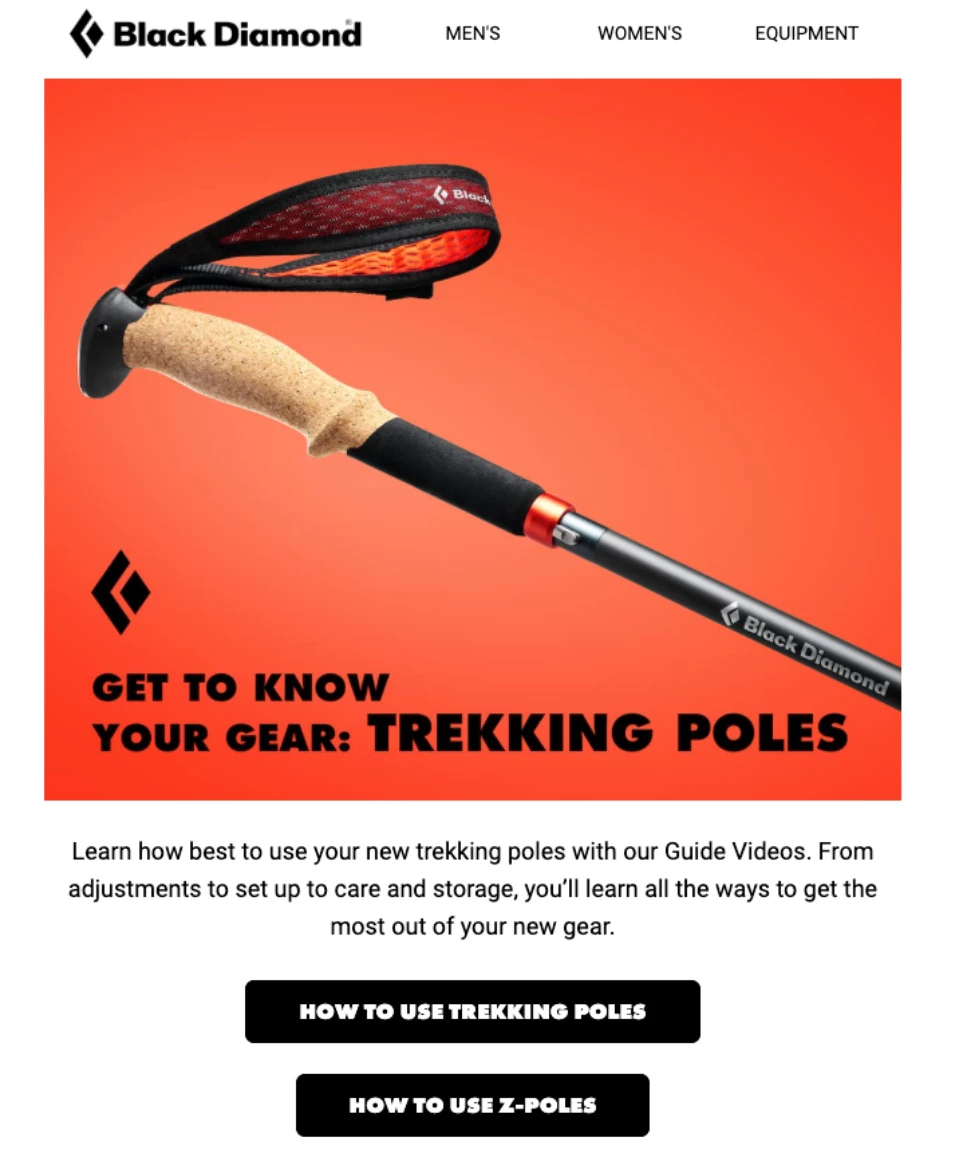
For category-level post-purchase flows, we usually tailor messaging around the customer's recent purchase behavior. For product-specific flows, we often include:
- Set-up instructions
- Quick-start information
- Care instructions
- Athlete or expert tips
- Related products that improve the experience
This works particularly well for technical outdoor products because customers are often building toward a full system or kit over time.
Instead of pushing another discount, we can introduce complementary products naturally. We often use language like "complete the kit" or "recommended for your next trip" to position the up-sell in a more relevant way. For a full walkthrough of building this kind of flow, this guide to creating a post-purchase flow covers the set-up end-to-end.
“‘Complete Your Build’ is a smart product seeding vehicle for customers who've only purchased the core product. It creates a psychological open loop - the sense that their kit isn't quite finished, which naturally pulls them deeper into your catalog. It also signals that your brand serves a full lifestyle ecosystem, not just the one item they bought, building real brand affinity beyond that first transaction,” says Tabish Bhimani.
I've found that these flows tend to perform best when the recommendations genuinely support the original purchase.
Track profitability metrics, not just engagement metrics
Whether I'm working on segmentation, dynamic recommendations, or post-purchase flows, I try to evaluate performance through both engagement and profitability metrics.
AOV is obviously one of the biggest indicators, and if you're not already tracking it inside Klaviyo, this explainer on how to calculate average order value is a good place to start.
I also pay close attention to:
- Revenue per recipient
- Click-through rate
- Conversion rate
- Repeat purchase rate
- Unsubscribe rate
The goal isn't simply to make emails feel more customized. The goal is to help customers discover the right products, increase basket size naturally, and create a healthier revenue mix that relies less on constant promotions.
“These emails also train customers to click when they see your name in the inbox. This habit compounds into stronger engagement signals over time, improving your deliverability and ensuring your emails keep reaching them,” says Tabish Bhimani.
Final thoughts and question for you
I've found that personalization works best when it's approached incrementally. You don't need to rebuild your entire email strategy overnight. Even small adjustments inside Klaviyo, whether that's refining segments, adding a dynamic product feed, or testing a post-purchase up-sell, can have a meaningful impact over time.
Most importantly, I think these conversations around personalization are valuable because every brand approaches it a little differently. What works for one audience may not work for another.
What personalization tactics have worked best for increasing AOV without leaning harder on discounts? Have you tested any up-sell, bundle, or post-purchase strategies recently that surprised you?
Drop a comment below and share your experience. I'd love to hear what's working for other teams and brands right now.